
The Tiber and Carpina Valleys
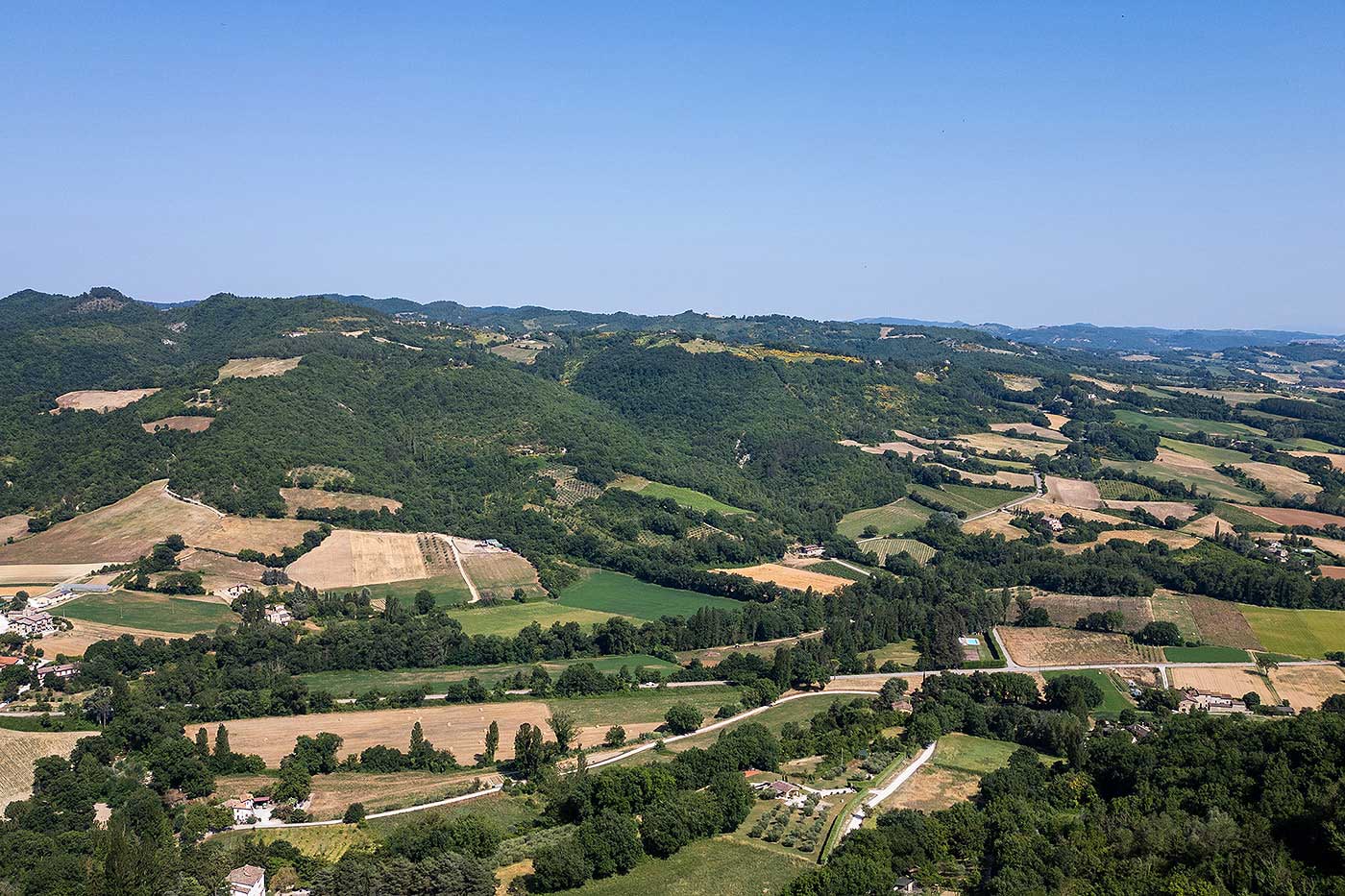
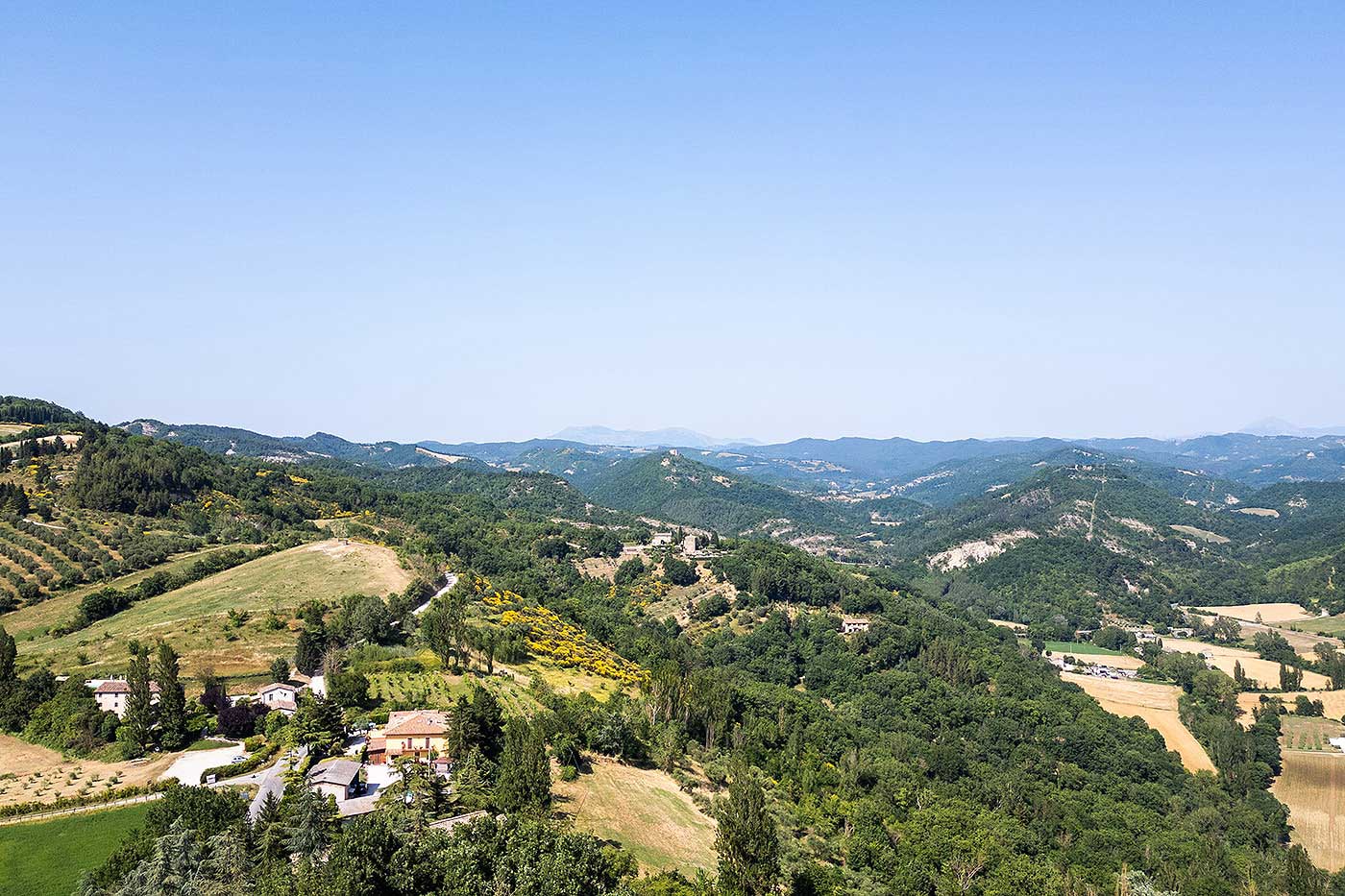
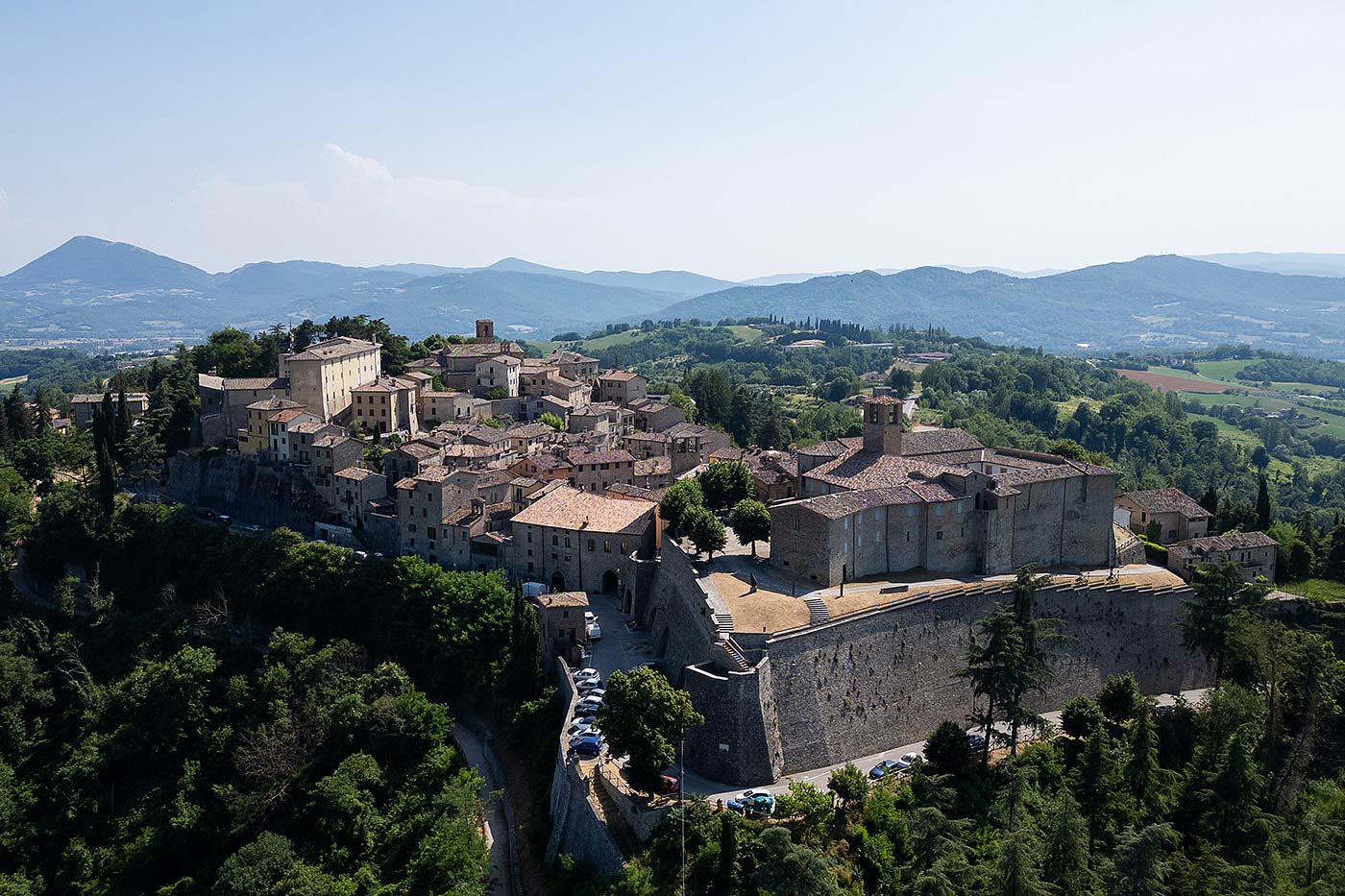
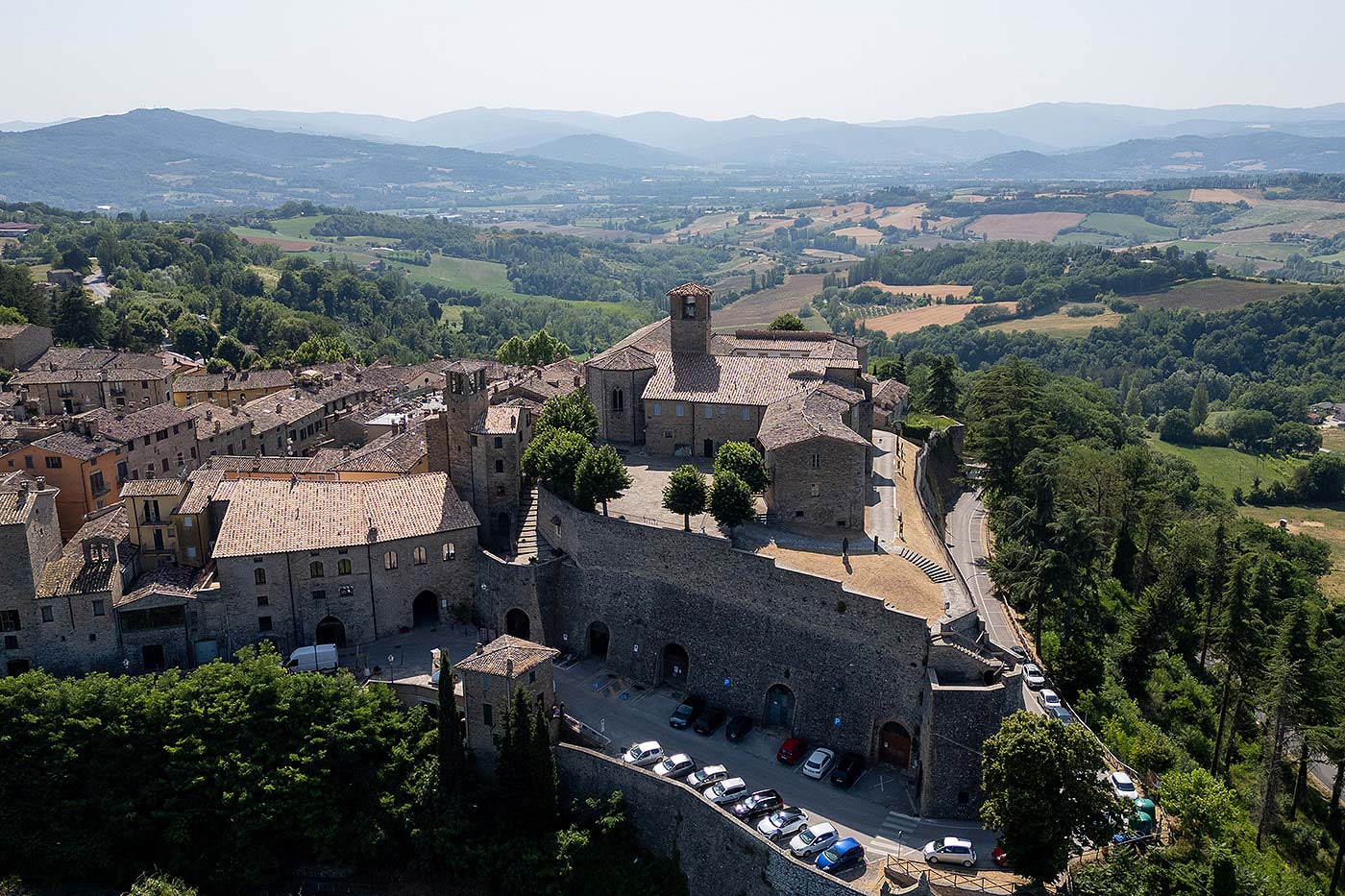
The Castel Vecchio, from which the town of Montone originated, stood on the hill which controlled the pass leading from the wide Tiber Valley to the much narrower Carpina Valley.
In the early Middle Ages, anyone wanting to travel from Città di Castello to Gubbio could take the old roads which followed the respective courses of the Tiber and Carpina rivers. This route, however, added considerable time to the journey. Alternatively, they could use the roads on the ridge such as the one that goes to Pieve di Saddi via Pietralunga, but these were challenging in winter.
The parish church of San Gregorio Magno at the foot of the castle, was built at the pass on the shortest and easiest route connecting the two towns. The construction of the parish church of San Giovanni Battista and San Gregorio Magno in Montone, can be traced back to the 9th-10th centuries.
Since then, the Città di Castello diocese had been dotted with a number of parish churches. Situated on main roads between rural areas and towns, they were where faith was spread and baptisms performed for the rural population. They also acted as places for travellers and pilgrims to rest.
Since 1100, records have referred to the “hospitium” associated with the parish church, which was financially supported by the bishopric and later also by the community.
Between 1304 and 1306, Bishop Ugolino Gualterotti transferred his seat to the parish church of Montone, as the Ghibelline faction which opposed him, had taken power in Città di Castello. He convened a diocesan synod there in 1305, but it was abandoned by the canons of the cathedral of Città di Castello. From this period onwards, the parish church of San Gregorio was endowed with a college of canons, which in the 16th century moved together with the archpriest to the church of Santa Maria in the town.
The ancient parish church is Romanesque in style, with three naves divided by large arches resting on strong brick pillars. The central nave ends in a semicircular apse.
Two of the original loopholes that provided light to the hall, and the small window of the apse are visible from the outside.
At the end of the three naves are three altars; the main altar consists of a tabernacle with large wooden doors. The altar was dedicated to the Holy Cross and housed the wooden Deposition, which is now kept in the municipal art gallery.
On either side of the main altar are two 15th-century stone tabernacles. These had been transferred to the parish church, from the church of San Francesco at a date unknown.
All the walls of the large hall must have originally been covered in frescoes, but many of these works of art that adorned the church have been lost. This is as a result of the frequent and necessary whitewashing that took place during pastoral visits. It was to ensure that hygiene was maintained as the church oversaw numerous burials. Some votive frescoes from the 15th and 16th centuries survive, as well as a Trinity on the counter-façade next to the entrance door.

Discover one of the most beautiful villages in Italy
©2026 Montonein | Cookie Policy | Privacy Policy
site created by Made in Italy Lab