In the 13th century, the town began to spread out beyond the moat which provided a line of defence on the south side of Castel Vecchio. It is where today’s Corso Garibaldi is located. The town centre expanded out to the second higher hill where the new fortress would be built.
The town’s growth and expansion was a result of various political and administrative developments, at a time when the Montone region began to free itself from the rule of the Marquises of Monte to become an independent community through self-determination.
From 1248, Montone returned more or less permanently to the Perugia region after being under the control of Città di Castello for a period of time.
At this time of relative political stability, the community was able to grow and a new urban layout to develop. New curtain walls were built from the modern defensive structure on the hill, but they would not be the last to be constructed.
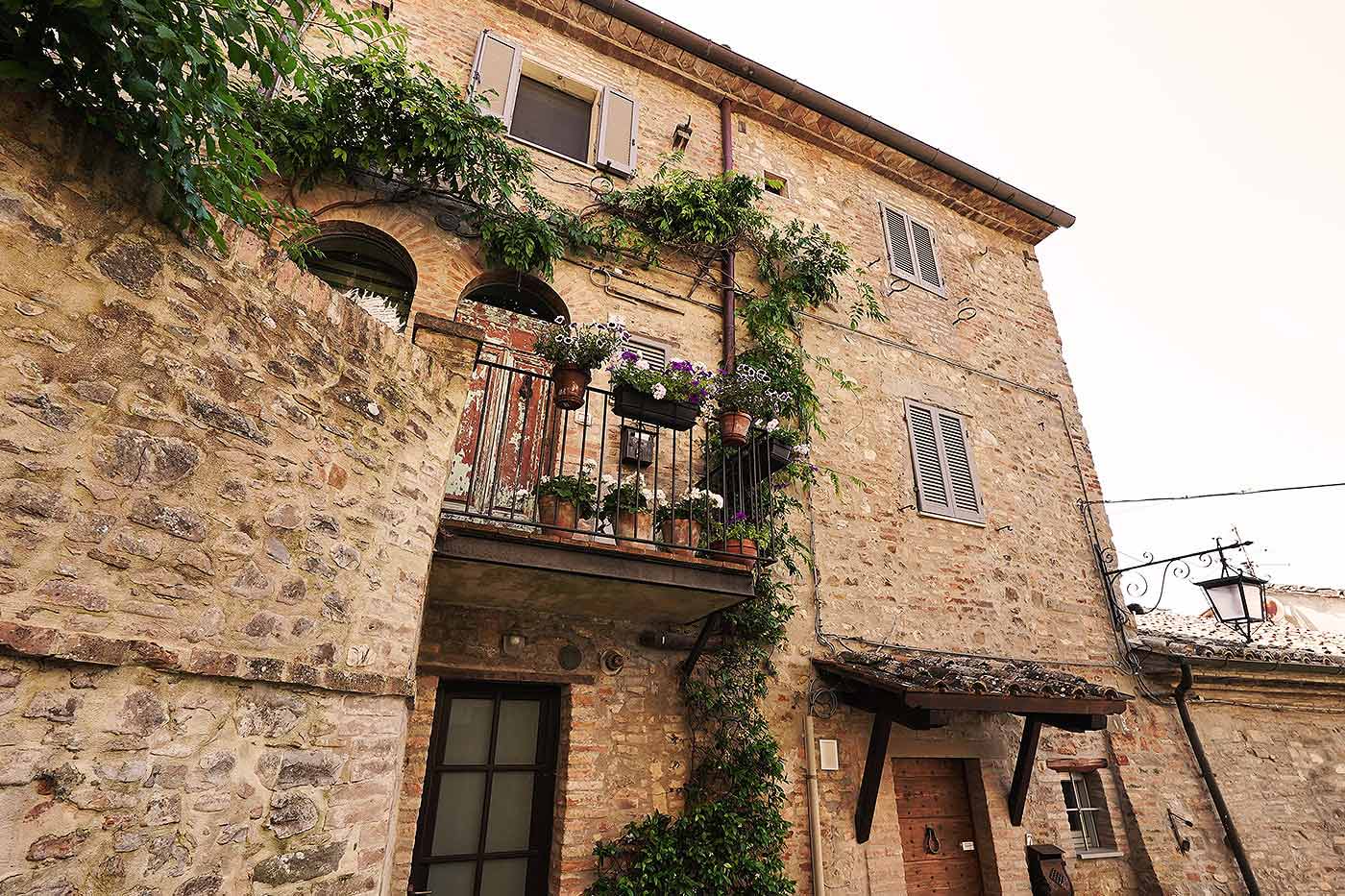
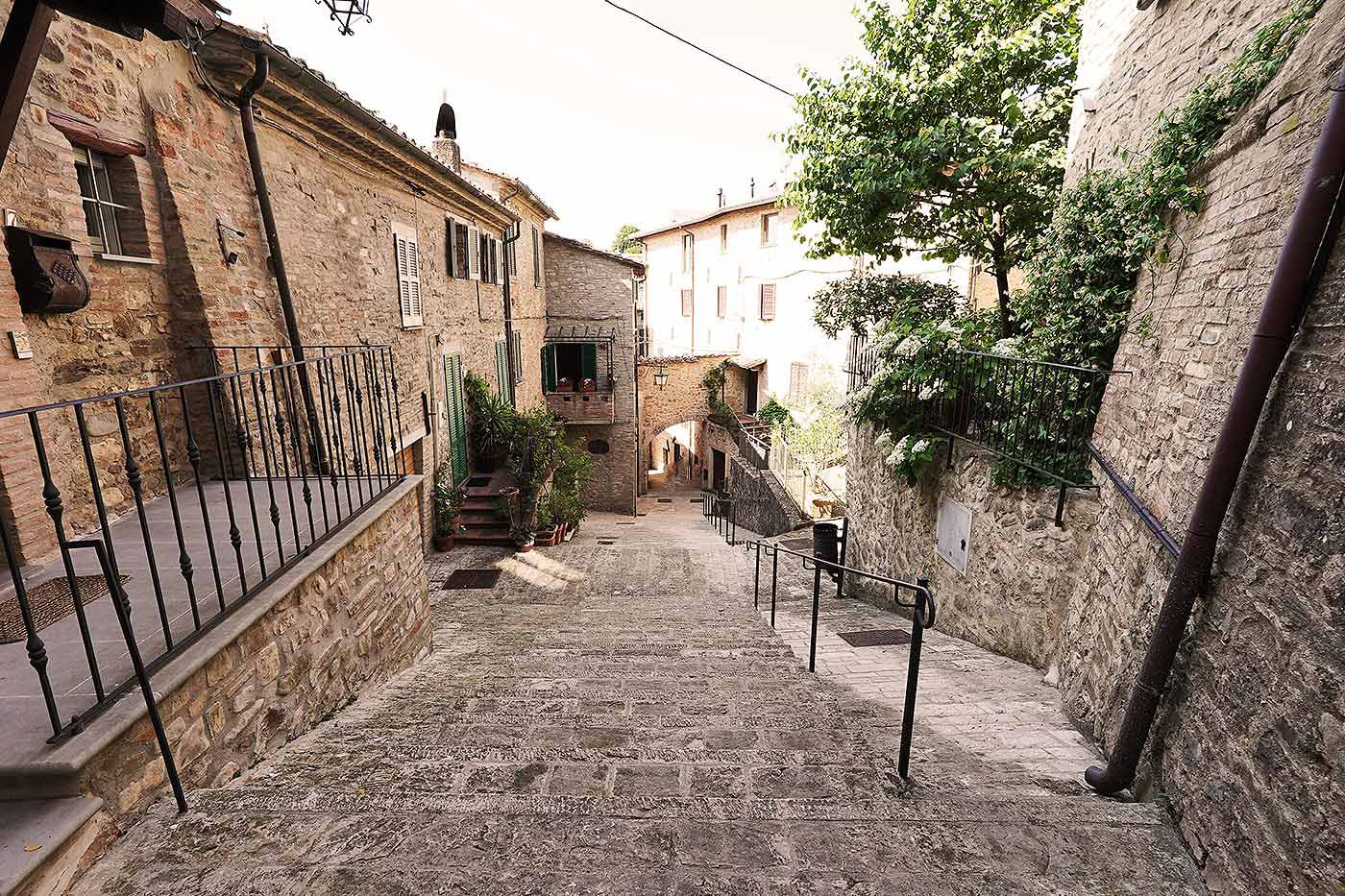
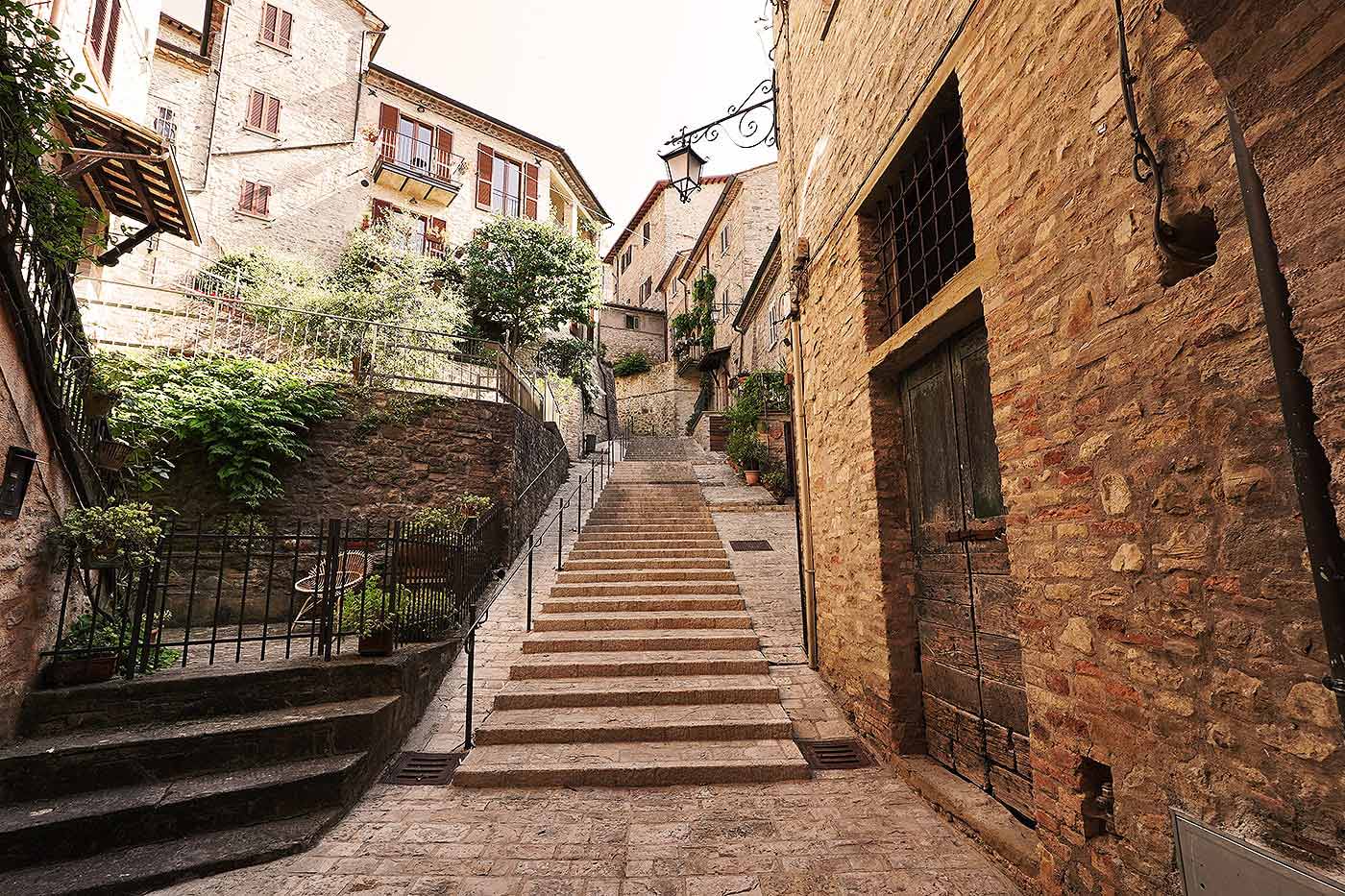
Along the perimeter and in the “saddle” of the town, houses for the people were built on terraces. Marked by the slope of the hill, they were in increasingly narrow sedimina, as can be clearly seen in the Scalacce where the houses are built against the medieval walls, as is the large convent of Santa Caterina.
This is how the districts of Porta del Monte and Porta del Verziere originated.
In 1358, approximately one century later, 187 households or about a thousand people within the walls were registered for tax.