
The Pieve di San Gregorio
Listen to the audio-guide
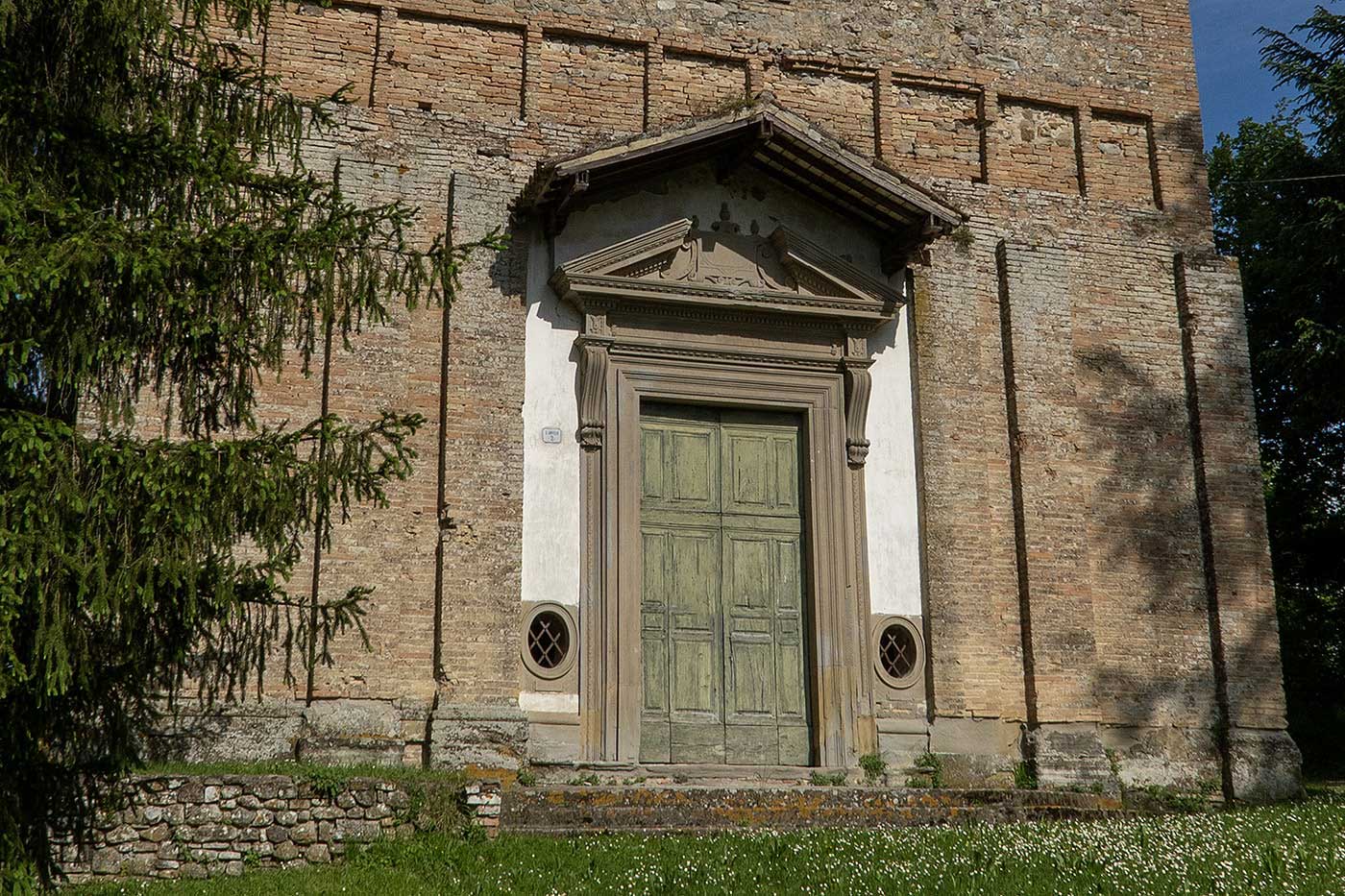
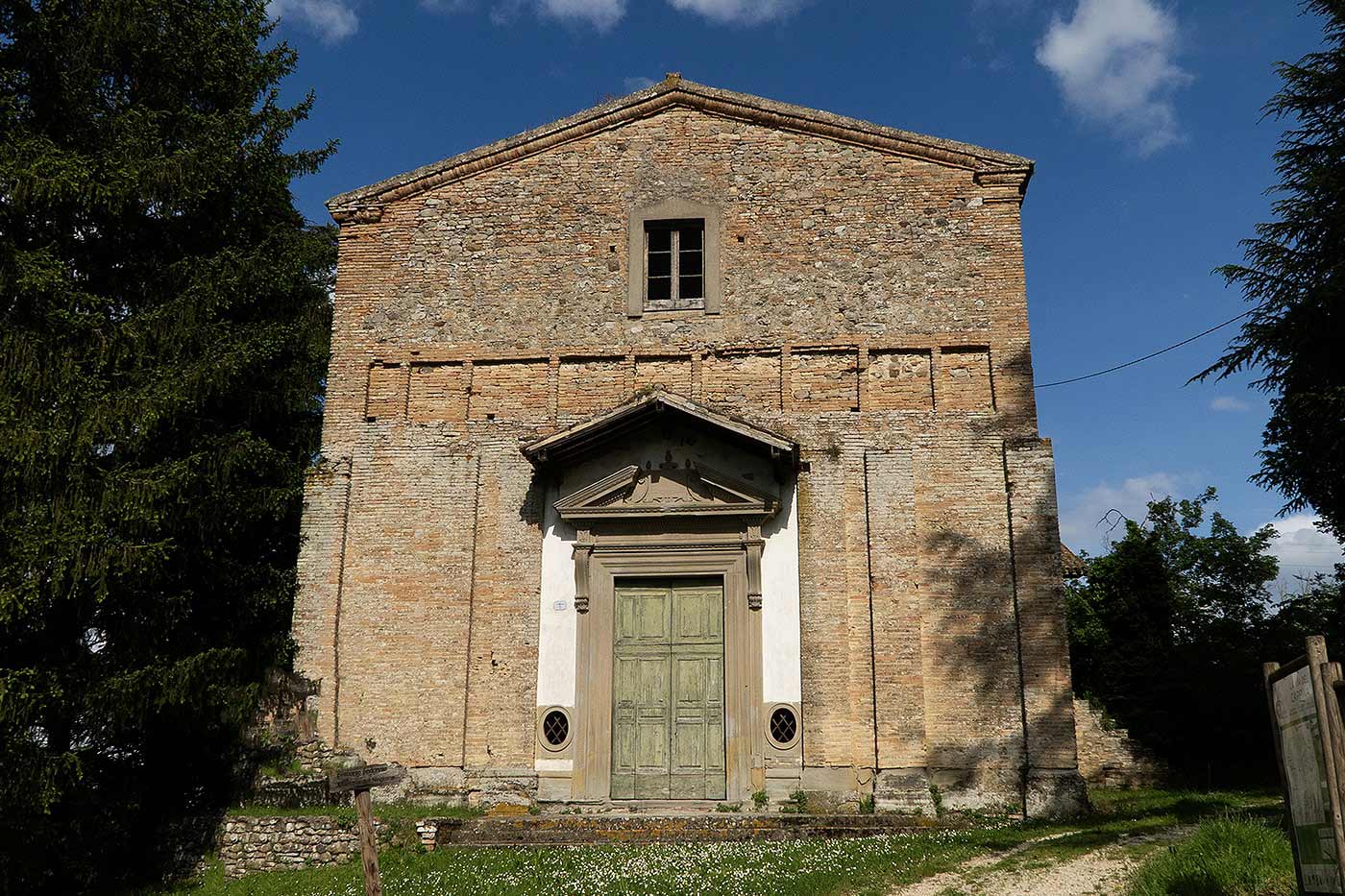
La Pieve di San Gregorio Magno was built on the shortest and easiest route connecting Città di Castello to Gubbio.
It is located on the pass that leads from the wide Tiber valley into the narrow Carpina valley, where the road continues towards Bagnolo and from there reaches Gubbio. The Castel Vecchio, from which the village of Montone originated, was located on the hill that controlled the pass.
The construction of the parish church of San Giovanni Battista and San Gregorio Magno in Montone, can be traced back to the 9th-10th centuries.
Since then, the Città di Castello diocese had been dotted with a number of parish churches. Situated on main roads between rural areas and towns, they were where faith was spread and baptisms performed for the rural population. They also acted as places for travellers and pilgrims to rest.
Since 1100, there have been records of the “hospitium” attached to the parish church, which was financially supported by the bishopric and later also by the community.
Between 1304 and 1306, Bishop Ugolino Gualterotti moved his seat to the parish church of Montone, as the Ghibelline faction which opposed him held power in Città di Castello. He convened a diocesan synod there in 1305, but it was deserted by the canons of Città di Castello cathedral. From this period onwards, the Pieve di San Gregorio was endowed with a college of canons who in the 16th century, moved with the archpriest to the church of Santa Maria in the town.
The ancient parish church is Romanesque in style, with three naves divided by large arches resting on strong brick pillars. The central nave ends in a semicircular apse.
Two of the original loopholes that provided light to the hall are visible from the outside, as well as the small single-lancet window of the apse, which was filled in during the 16th century to make way for the altarpiece.
At the end of the three naves are three altars: the main altar consists of a tabernacle with large wooden doors. The altar was dedicated to the Holy Cross, and contained wooden statues that are now kept in the municipal art gallery.
On either side of the main altar are two 15th-century stone tabernacles. These had been transferred to the parish church, from the church of San Francesco at a date unknown.
It must have been completely covered in frescoes but many of the works that adorned the church were lost as a result of the frequent whitewashing ordered during pastoral visits. This was necessary to ensure hygiene in a church that was the site of numerous burials. Some votive frescoes from the 15th and 16th centuries survive, as well as a Trinity on the counter-façade next to the entrance door.
Under the right aisle, a niche resting on a large stone basin built into the wall, suggests the location of the ancient baptismal font that the parish church must have had since its origins.

Discover one of the most beautiful villages in Italy
©2026 Montonein | Cookie Policy | Privacy Policy
site created by Made in Italy Lab