
Carpina Valley
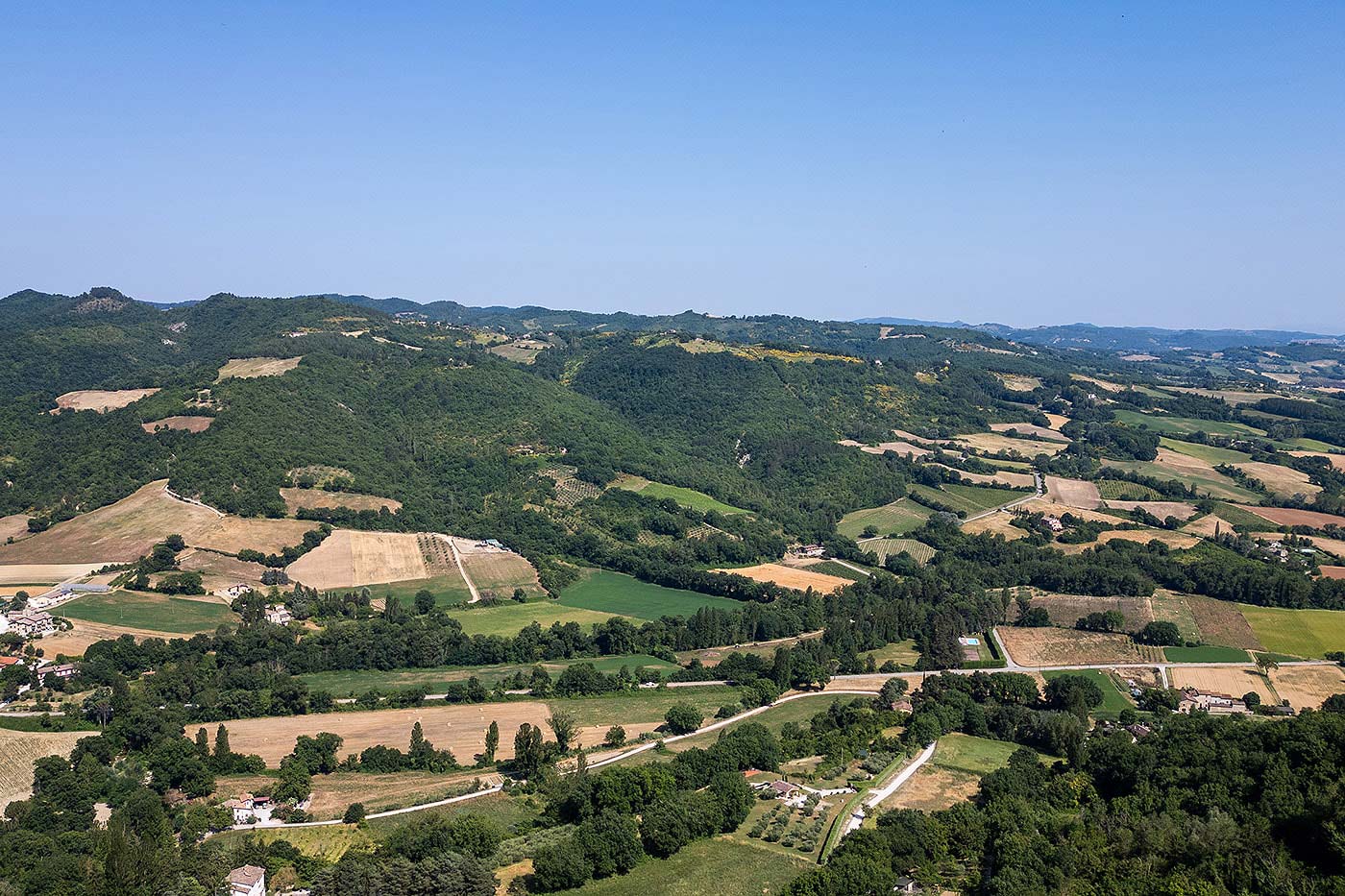
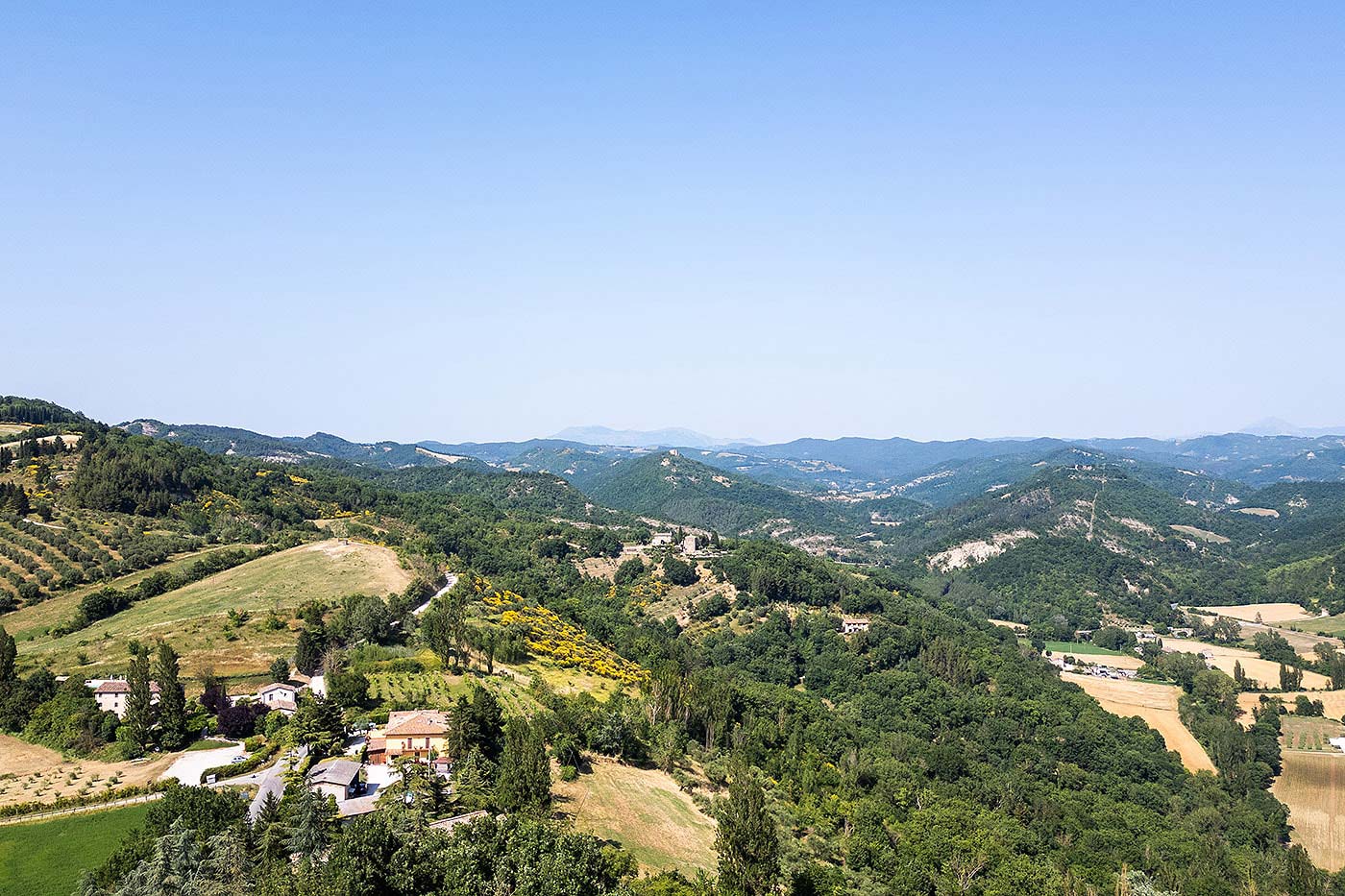
The Montone area is bordered on the south-west by the Tiber River, and on the north and north-east of the town by the Carpina, the Tiber’s left-hand tributary, and the Carpinella stream which descend from their respective valleys, while the Lana stream forms most of the western boundary.
The Capanneto or Castel Vecchio occupied the hill where the convent of St. Francis now stands. At the top of the hill, on either side of the primitive fortress, two vast terraces enabled control of the Tiber Valley to the west, and the Carpina river valley to the east.
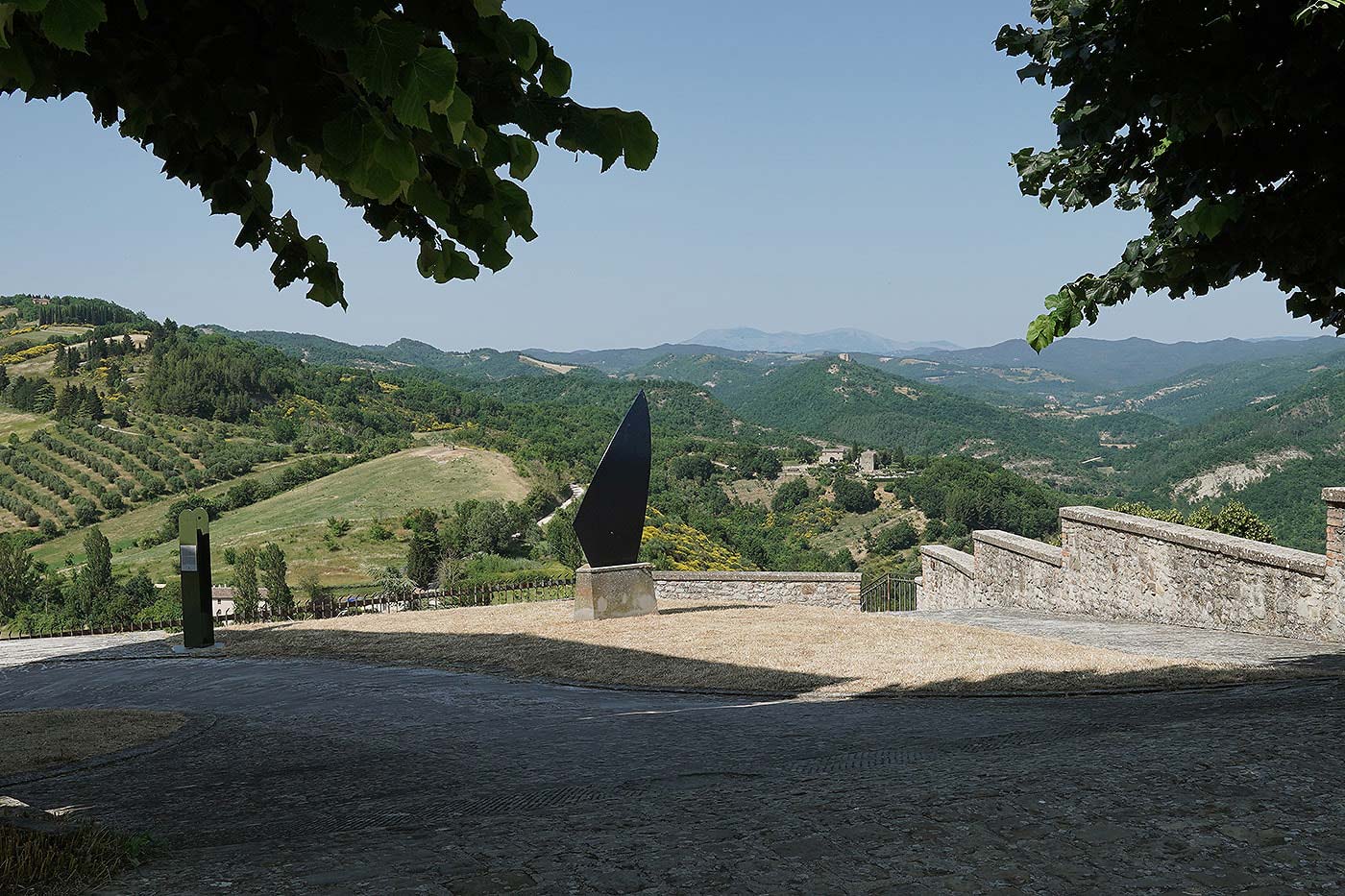
The source of the Carpina river is on the southern slopes of Mount Trecciole, and it flows through the mountains in the municipality of Pietralunga, and then among the hills and plains in the municipality of Montone. The river, with its dense network of tributaries, has formed a picturesque and wild landscape in the hills which slope down from the Apennine ridge. The silhouettes of both Mount Nerone and Mount Catria are visible on the horizon as it winds its way through cultivated farmland on the plain.
The waters of both the Carpina and Carpinella, although affected by seasonal cycles, have always been a source of wealth for the local people.
It enabled the irrigation of the fields on the plain ensuring that the town was supplied with sufficient food for its needs, and also provided the water required for livestock farming.
In places where the current slows and the river widens into calm pools, the debris it has been carrying is deposited along the banks. For centuries, the stones, gravel and sand which collected here provided the material for paving the village of Montone, and for building the most basic houses. Sandstone, extracted from small quarries situated halfway up the valley slopes of Carpina, was used to produce the blocks used for the more important buildings.
In times gone by, a large number of mills were dotted along the course of the two streams. Powered by energy provided by the water, the mills used ingenious methods of canalisation to grind cereals, fodder, olives and even Isatis tinctoria. This was used to produce woad, the blue dye used for dyeing yarns from the 13th to the 18th centuries.
Heading back up the Carpina and Carpinella rivers, you pass through woods that display a surprising wealth of colours, especially in the autumn. This is thanks to the varied population of plant species.
Among the flowers here, there are four species of orchid which are considered to be rare, but the real stars of the two valleys and held in high prestige gastronomically, are the numerous natural truffle grounds. Trifola, bianchetto, scorzone and the rare nero di Norcia truffles can be harvested here.
There are as many as 72 different species of birds that nest in the valley, and the water there is of such high quality that it is home to brown trout, crabs and crayfish.
The fact that a rich and diverse fauna exists here is due to the variety of food available at all levels of the biological chain. This is a clear indicator of low-impact agricultural practices. Here, nature can fully reveal its beauty and splendour, thanks to low-level human intervention in recent times.

Discover one of the most beautiful villages in Italy
©2025 Montonein | Cookie Policy | Privacy Policy
site created by Made in Italy Lab