
Collegiate Church (13th-18th centuries)
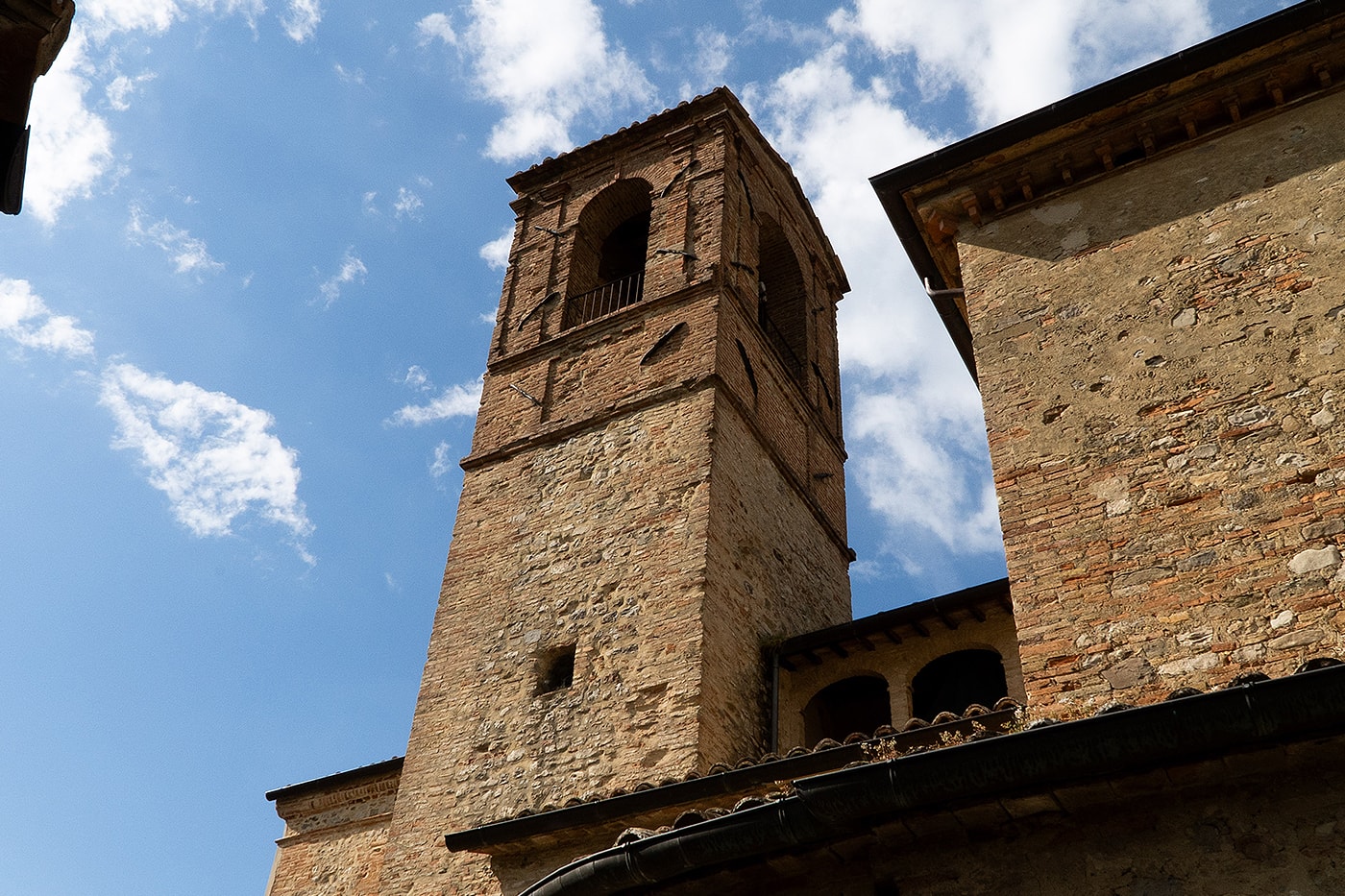
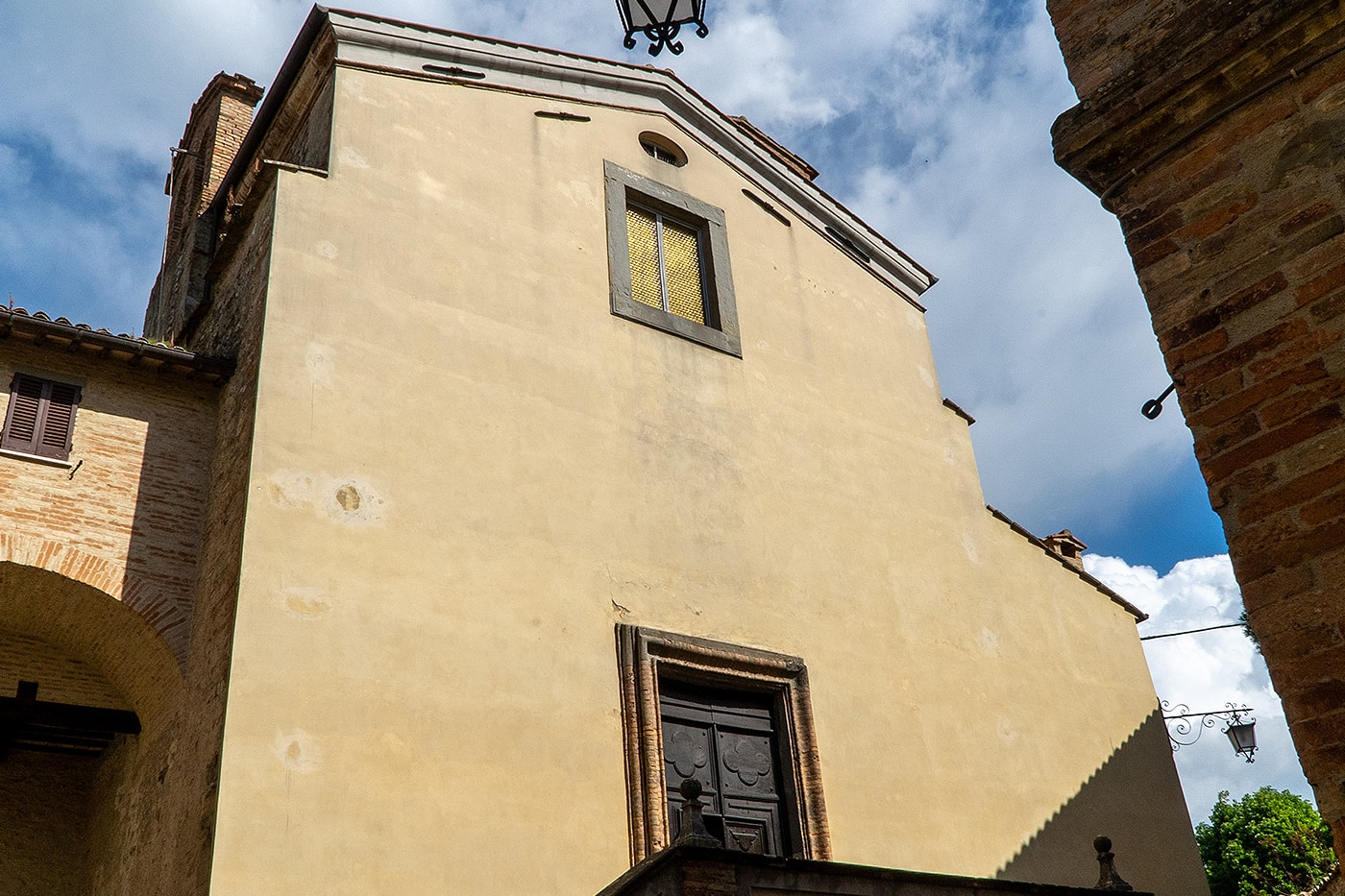
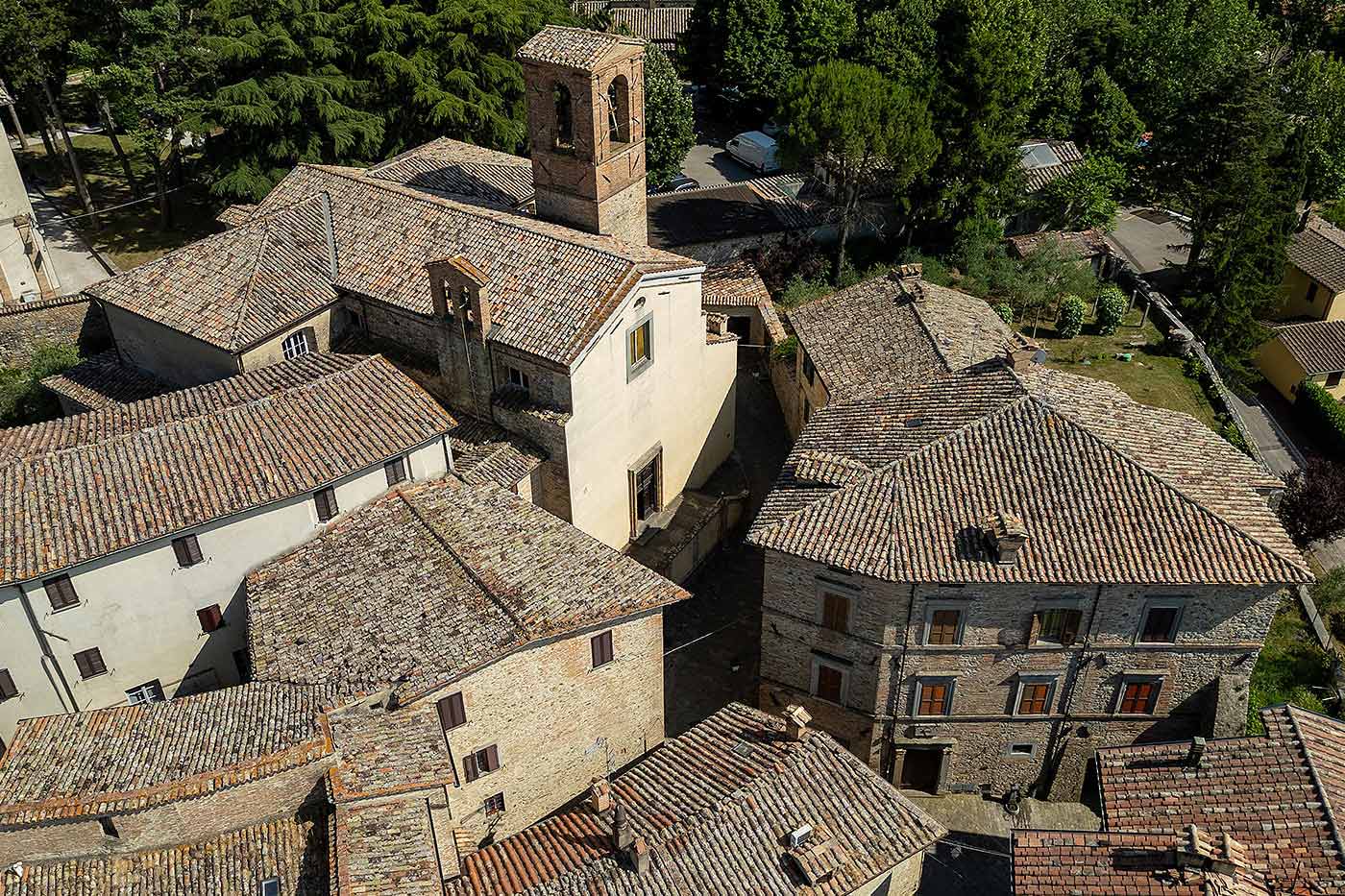
The first mention of a church dedicated to Santa Maria in the Montone records dates back to 1342. It appears in the municipal statute relating to the hospitalis pauperum (hospital for the poor) of Santa Maria Nuova. It is clear that the church, which stands on the higher of the two hills on which Montone is situated, had been recently built.
In the 16th century, both the “care of souls” and the college of canons, which had been based in the ancient parish church of San Gregorio Magno, were transferred there.
In 1571, the apostolic visitor, Paolo Maria della Rovere, ordered the canons to recite the sacred offices in Santa Maria. The church was small, however, so he ordered it to be enlarged.
In 1595, the new apostolic visitor raised doubts about the capacity of the church, and also about its location. He noted that it was situated not in the centre but in the highest part of the town, which made it difficult for the elderly to reach in winter due to ice. The celebrations were transferred to Santa Croce which was located in the public square. It was very popular with the people, and larger and more convenient to reach than Santa Maria. In addition, an enlargement would have involved considerable expense.
The church was finally extended in the second half of the 17th century, after Canon Giovanni Pazzaglia donated the necessary money for restoration and expansion in 1657. The modernisation work began immediately, and by 1661 it seemed to be well underway, but the rich decoration and final layout of the church were not completed until the end of the 18th century.
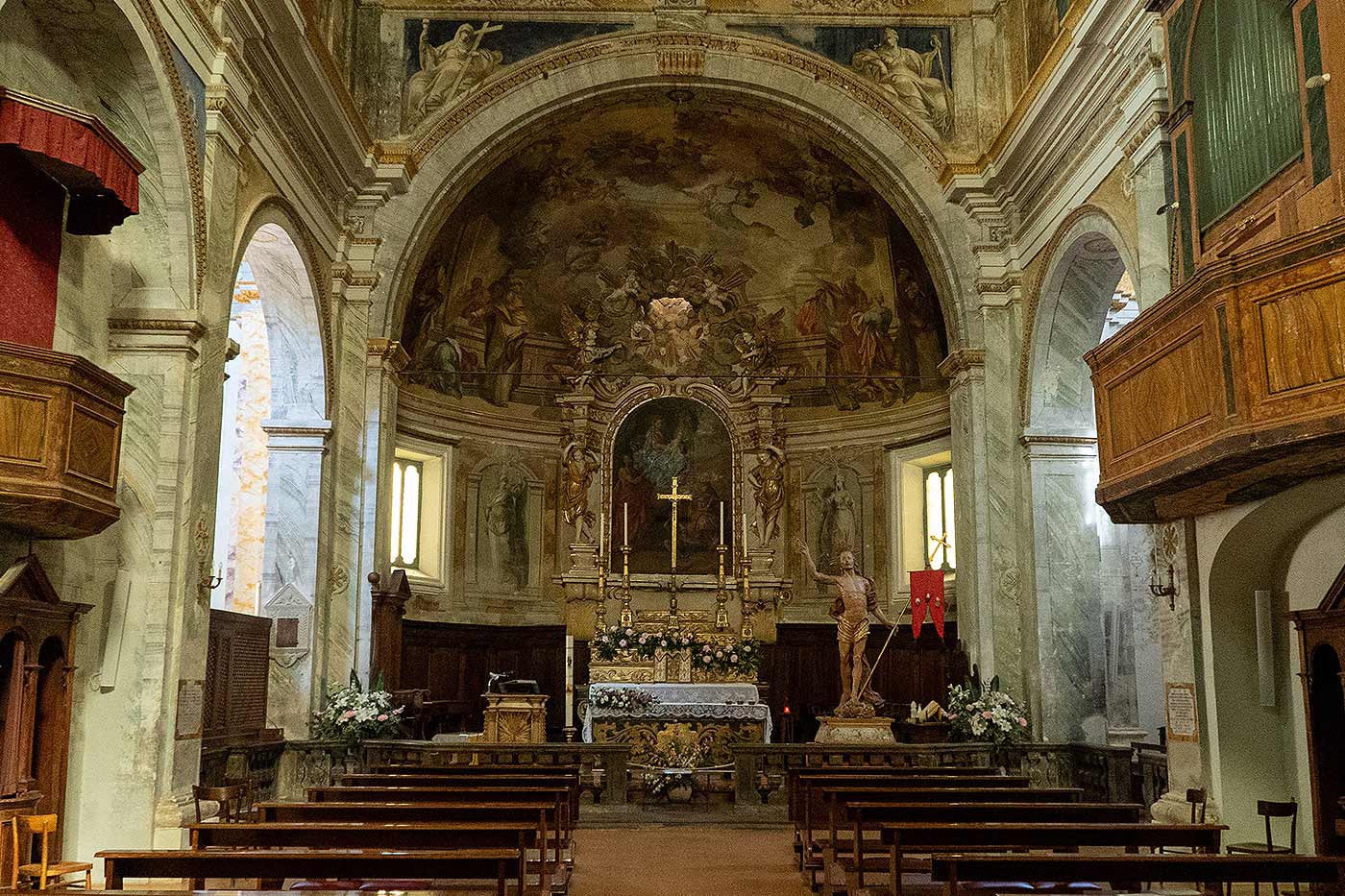
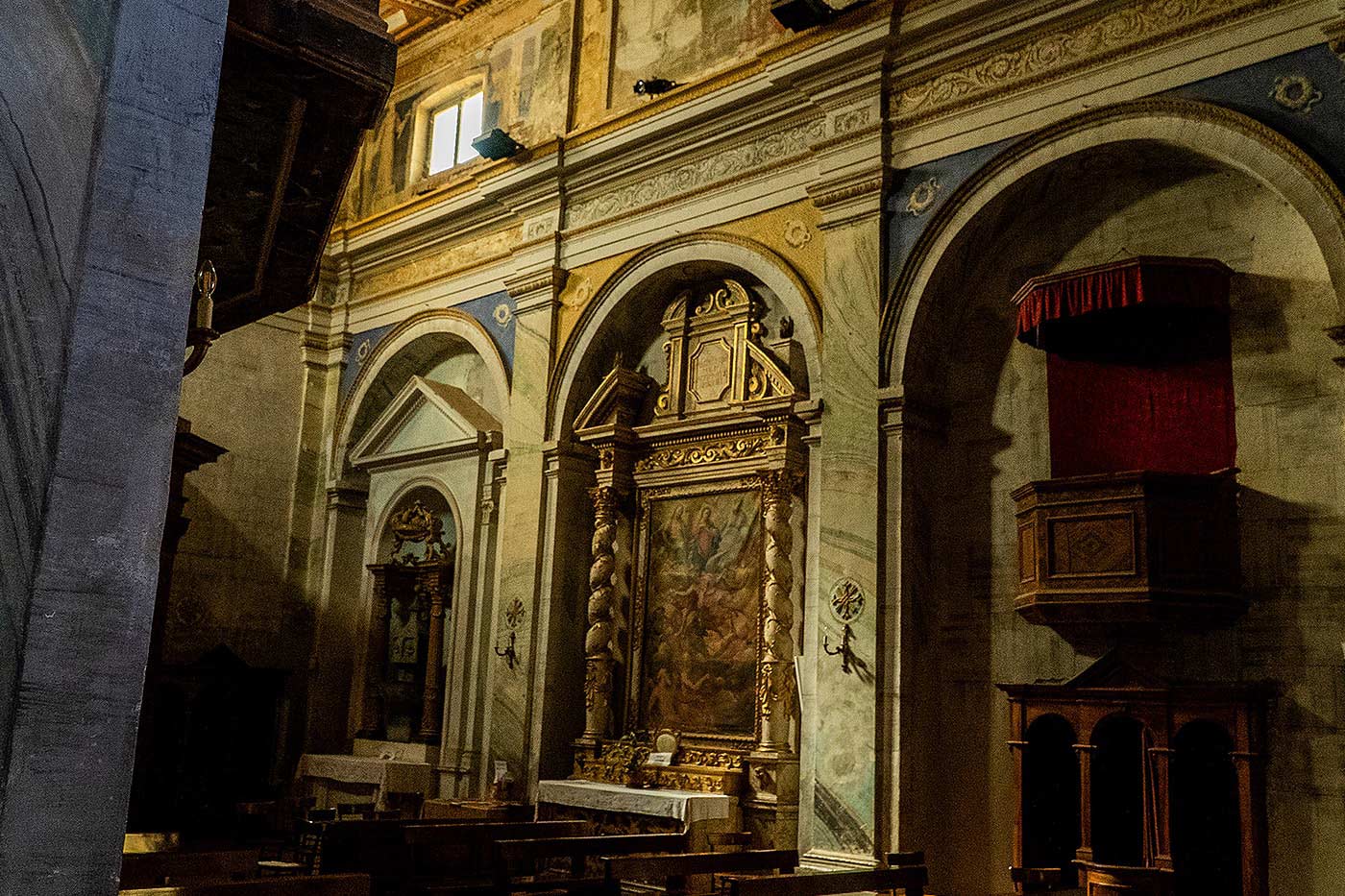
The collegiate church is a large building that has a Latin cross plan and a semi-circular apse, with a tall bell tower on the right side. The nave is symmetrically divided by four large arches on each side, which house four altars, an organ, a pulpit, and the two large side chapels of the transept.
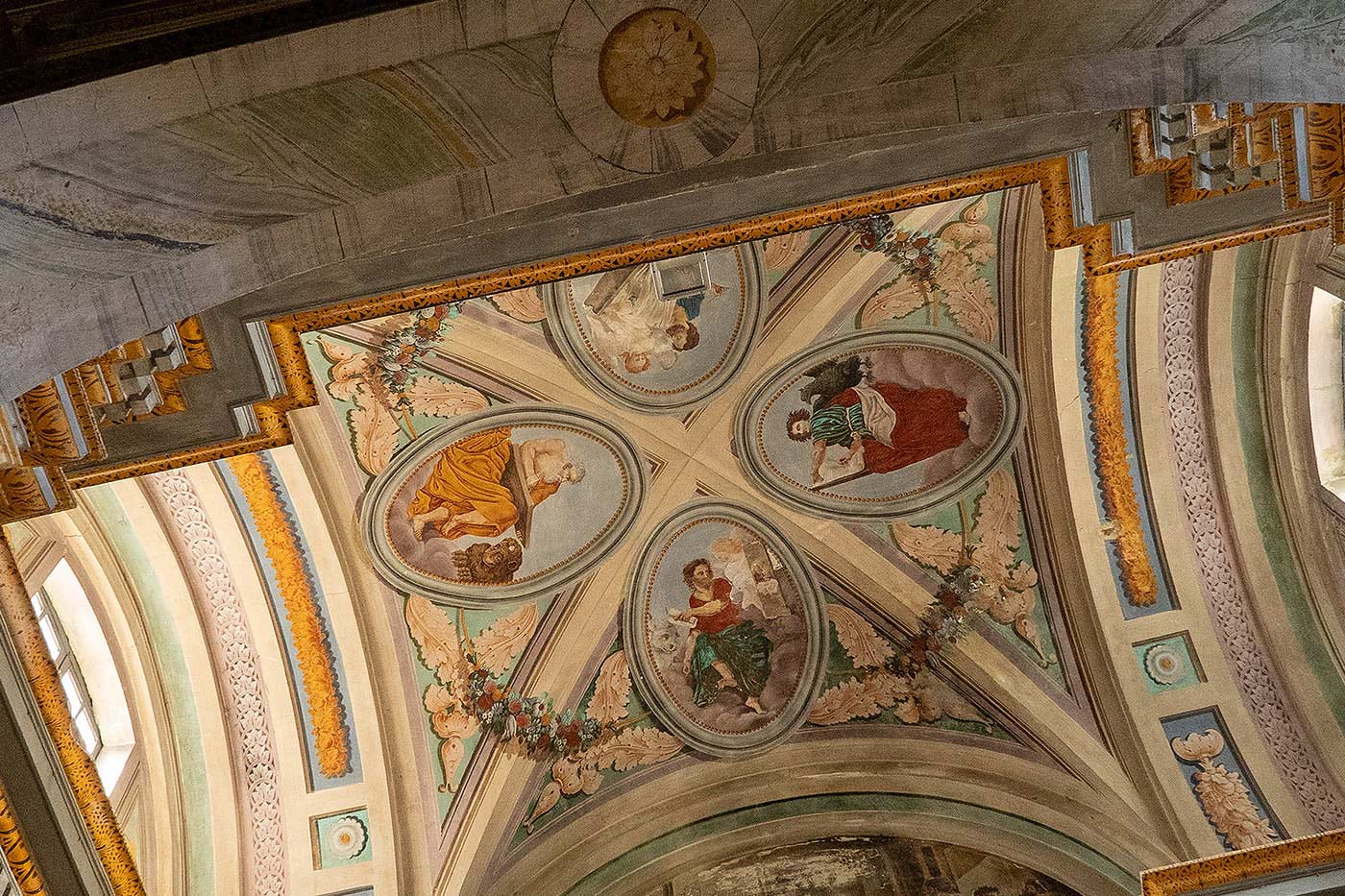
The church has a polygonal wooden ceiling with coffering that is decorated with floral motifs in gold. In the centre, it features a painting which depicts the Assumption in a riot of clouds with angels holding garlands of flowers; this is from the Tuscan school.
A majestic arch leads to the apse. The high altar is composed of two angel-shaped columns, Composite capitals supporting the tympanum, which is broken by a cluster of clouds fading into the tiny window from which the Holy Spirit descends among musical angels. The display was created in stucco at the end of the 17th century, and reproduces the classic themes of Baroque culture. The fresco, decorating the concave ceiling of the apse, incorporates the relief ornamentation depicting the Pentecost. It was painted in 1784 by the Florentine artist Giuseppe Parenti. An altarpiece from the late 17th century, showing Mary enthroned with the Child, St. Gregory the Great and John the Baptist is set in this monumental frame.
In the nave, the first arch on the right wall houses the altar constructed in 1825 and dedicated to St. Albertino da Montone, abbot of Fonte Avellana in the mid-13th century. The altarpiece, by Vincenzo Chialli from Città di Castello, represents the saint performing a miracle.
On the altarpiece situated under the second arch on the right, is what is believed to be the only surviving work from the 14th-century church: a Madonna del latte (Nursing Madonna) painted on a gold background and from the Sienese school, dating back to the 13th century.
There are also two valuable statues inside the collegiate church. These are S. Rocco and Salvatore, and both were originally from the church of the San Fedele hospital. The chapel of the Madonna del Rosario features a work from the Church of Santa Croce, The Last Supper by Denis Calvaert. It was painted in 1611 and is the only painting by the Flemish painter in central Italy. At the time, Montone was a marquisate of the Vitelli family from Città di Castello who had connections to artistic circles in Bologna. This work was created specifically for Montone.
The rich and evolved embellishment of the church which although carried out over a long period of time between 1657 and 1750, is likely to have originated from a single design as can be deduced from all the pictorial design in the nave. As a whole, it represents an original treasure trove of art from this period that can still be enjoyed almost unchanged since its creation.

Discover one of the most beautiful villages in Italy
©2025 Montonein | Cookie Policy | Privacy Policy
site created by Made in Italy Lab