
The Feast of the Donation of the Holy Thorn
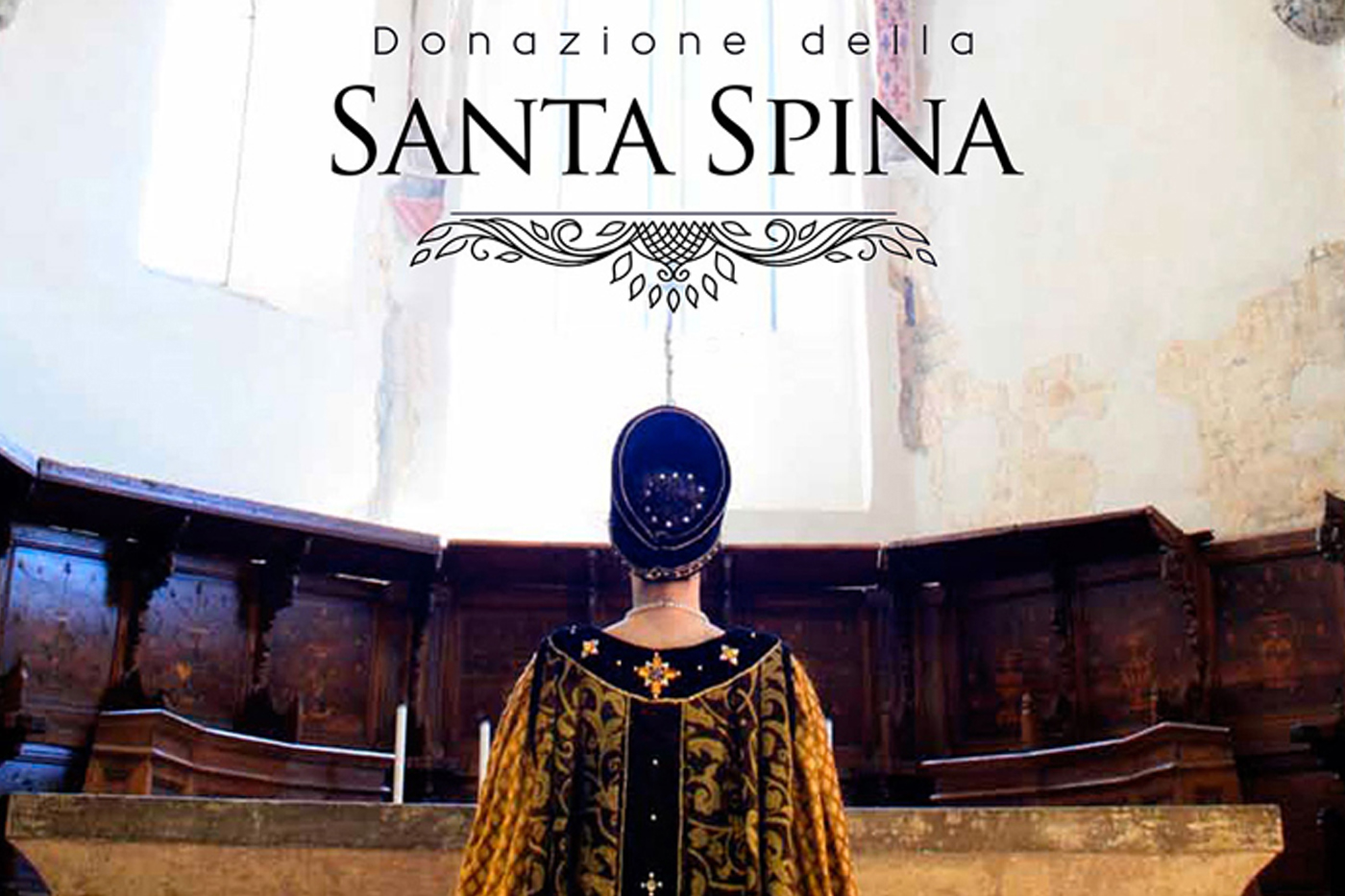
Una rievocazione storica che richiama migliaia di visitatori ogni anno. This historical re-enactment attracts thousands of visitors every year.
It celebrates the donation of a thorn from the crown that encircled the head of the Redeemer, to the people of Montone by Count Carlo Fortebracci, son of Braccio, the famous commander and mercenary captain.
In 1473, Count Carlo Fortebracci, General of the Militia of the Most Serene Republic of Venice, had driven the Turks from the Venetian borders and received a thorn from the crown of Jesus Christ as a gift from the Archpriest of the village of Tugnano. On his return to Montone, Count Carlo presented the Holy Thorn to the people of Montone, and it was placed in the church of San Francesco dei Minori Conventuali so that everyone could pay their respects.
The Holy Thorn was held in such reverence that in 1635, it was placed in an ornate, finely chiselled silver reliquary. It was also decided to solemnly honour it every year on Easter Monday. In 1638, the Holy Thorn was honoured twice in the same year. Documents in the historical archives confirm that people flocked to the Easter Monday celebration from all over the region. Even today, this precious relic still attracts countless visitors from all over Italy, both on Easter Monday and during the week of the penultimate Sunday in August which are the two days on which it is traditionally displayed. The historical re-enactment of the Donation of the Holy Thorn was established by the Montonese Pro Loco (Montone cultural association) in 1961. In the early years, it was linked almost exclusively to the religious ceremony marking the display of the Holy Thorn, with Count Carlo Fortebracci who originally gifted the relic to the people of Montone, leading a small procession to the square.
In subsequent years, it evolved to include a Challenge between the districts of Montone. Porta del Borgo, Porta del Monte and Porta del Verziere competed in popular games and contests: the total points acquired during the week allowed the winning district to elect its own Castellana. The figure of the Castellana represents Margherita Malatesta da Rimini, wife of Carlo Fortebracci, who ruled the city in his absence. In 1994, the Palio della Santa Spina was also established alongside the election of the Castellana. This marked the beginning of the contemporary version of the “Donazione della Santa Spina”. In order to win the Palio, the districts acquire points by means of the Bando di Sfida (Challenge announcement), archery and medieval Representations. Both the Bandi di Sfida (Challenge announcements) and the medieval Representations are judged by a panel of expert judges who evaluate the historical accuracy, scenography and interpretation. This formula keeps tensions running high throughout the week, until Saturday evening when the judges’ envelopes are opened and the winner is announced. On Sunday, the event ends with the historical procession of the Donation in which all the people of Montone, led by the newly elected Castellana, honour the return of Carlo Fortebracci who brings the Holy Thorn as a gift.
There are many volunteers whose work and commitment behind the scenes during the week-long celebrations, enable this “small” community to hold a “grand” historical re-enactment. It is one of the founding events of “Historical Events of Umbria” (2001), and has obtained UNESCO patronage (2007).

Discover one of the most beautiful villages in Italy
©2026 Montonein | Cookie Policy | Privacy Policy
site created by Made in Italy Lab